.svg)

Every mature ServiceNow platform tells the story of the business it supports. Years of customization and complex configuration reflect evolving business priorities, operational requirements, and unique nuances. Some continue delivering measurable value. Others outlive the problems they were built to solve.
A common misconception is that ServiceNow modernization begins by identifying everything that can be removed. In practice, the greater risk is removing platform capabilities that people still depend on every day. Teams can simplify their platform yet unintentionally disrupt established processes, introduce new operational risks, or recreate functionality that already existed for a reason. The objective is to preserve the customizations that continue creating business value while removing complexity that no longer does.
Every successful ServiceNow modernization initiative eventually reaches the same decision point: what should be preserved, what should evolve, and what should be retired. Once teams understand how their ServiceNow platform has evolved, the next step is making evidence-based modernization decisions.
Which Parts of Your ServiceNow Platform Actually Need Modernization?
Effective ServiceNow platform modernization begins by understanding which technical debt still creates business value before deciding which ones should change. Yet many modernization initiatives lose direction because teams prioritize technical complexity or upgrade effort before asking a more fundamental question: Does this platform component, configuration customization still create business value?
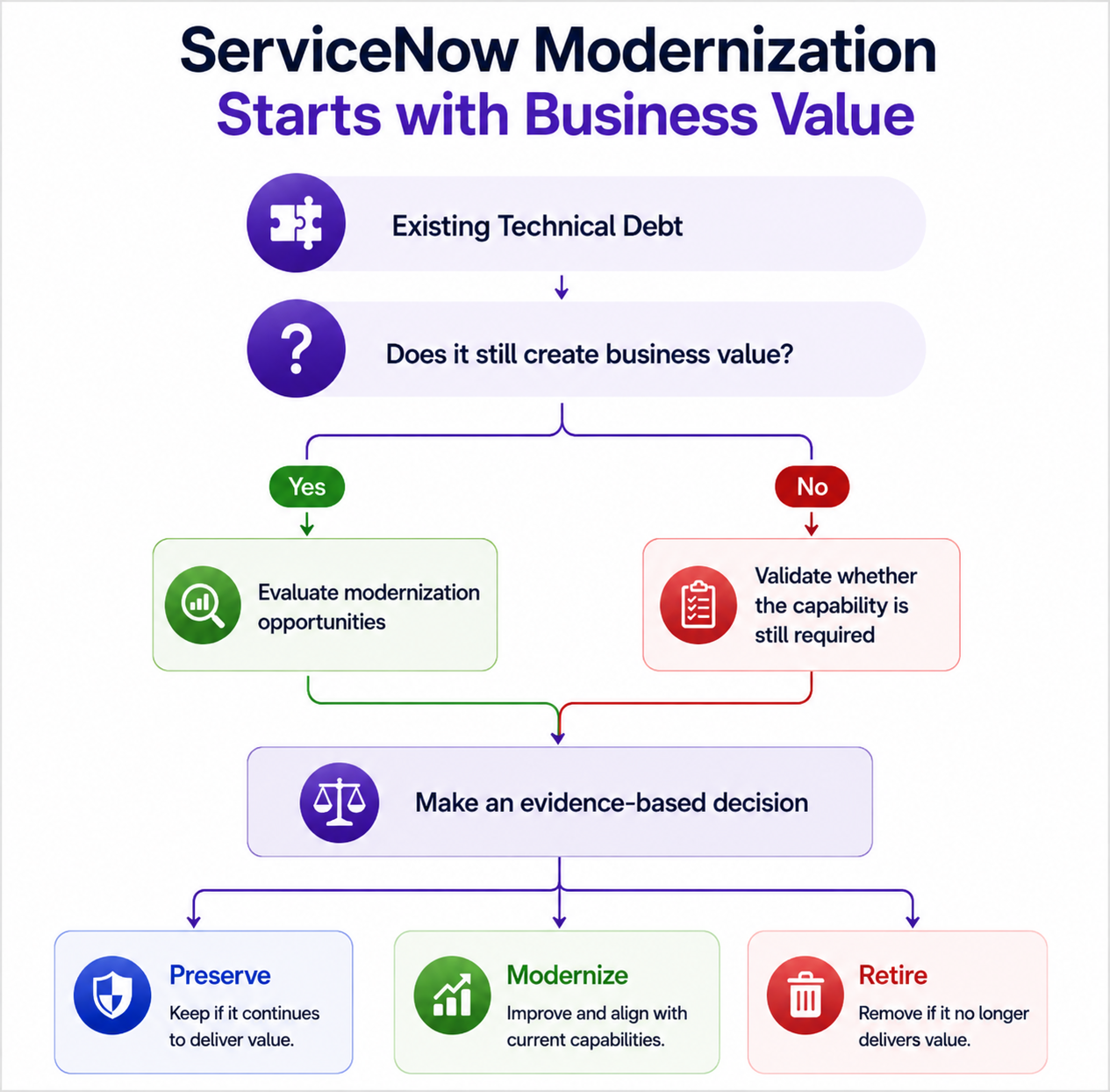
Technical debt shouldn't be preserved simply because it’s existed for years. If you're wondering how to modernize a ServiceNow platform, start by evaluating your technical debt with the following three questions:
• Business value: Does the configuration or workflow continue supporting measurable business outcomes?
• Business dependency: Would removing it interrupt an active process, compliance requirement, or customer-facing service?
• Future platform alignment: Can current ServiceNow capabilities deliver the same outcome with less complexity and lower maintenance?
One consistent pattern emerges during modernization assessments: the areas of technical debt that generate the most maintenance effort should not always be removed or changed first. Conversely, some of the easiest changes to make deliver the greatest long-term reduction in technical debt because they replace functionality that the platform already provides. If you've already measured your ServiceNow technical debt, you've probably discovered that identifying technical debt is only the first step. The harder decision is determining what each area of technical debt deserves next. That's where a consistent modernization strategy becomes essential.
How Do You Decide What to Preserve, Modernize, or Retire?
Once your technical debt has been identified and reviewed, it can be decisioned in the following four categories:
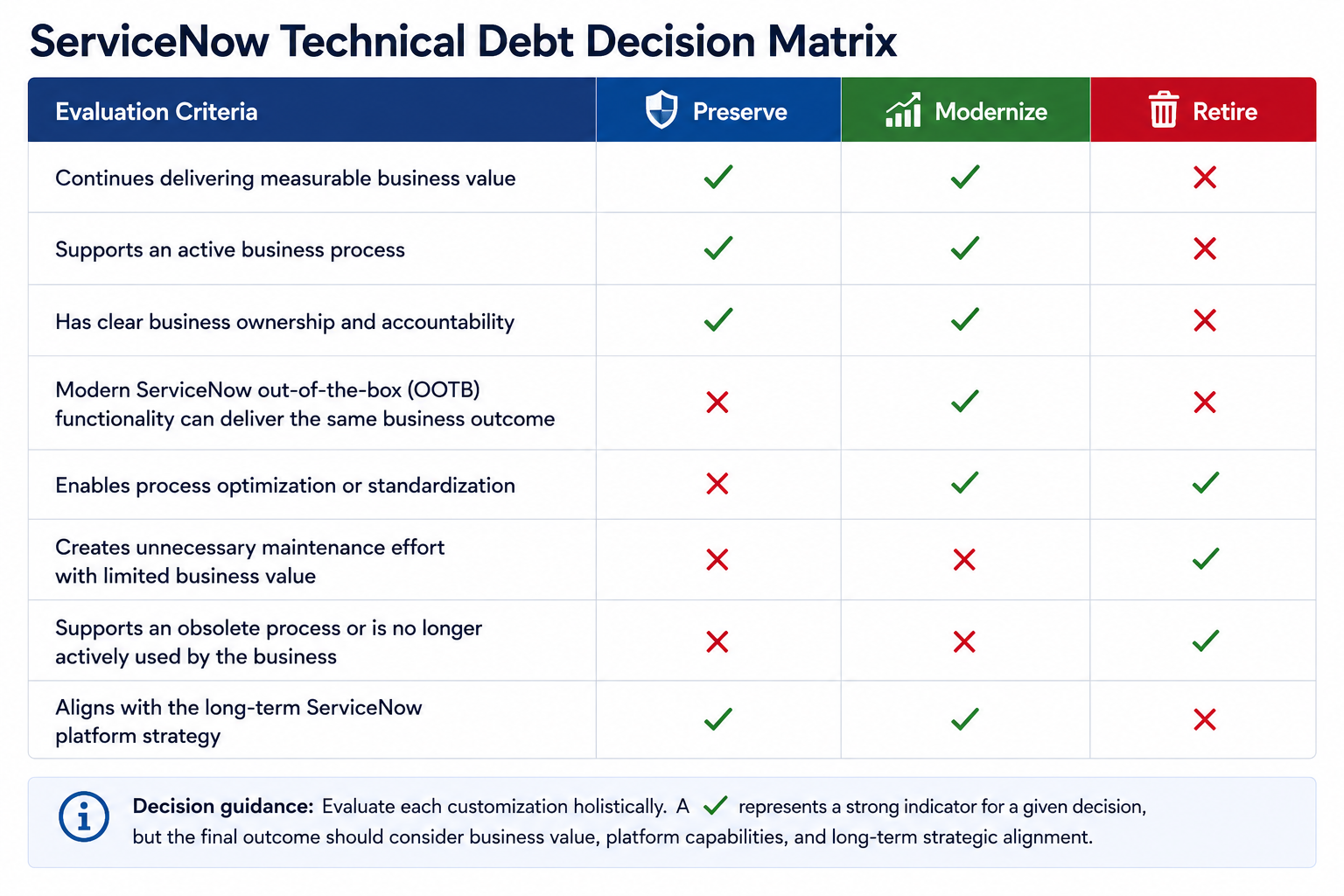
• Preserve platform capabilities, configurations, or customizations that continue delivering measurable business value and support active business processes. These are differentiators that the platform should continue supporting.
• Modernize areas where the business need remains, but newer ServiceNow out-of-the box functionality can deliver the same outcome with a simpler implementation. This reduces maintenance effort without sacrificing capability.
• Retire technical debt that no longer support the business, duplicate platform capabilities, or exist solely because of historical decisions that are no longer relevant.
• Govern everything that remains by documenting why it exists, who owns it, and when it should be reviewed. Without this discipline, today's justified customization becomes tomorrow's unexplained technical debt.
It is important to look at the technical debt from the lens of the process it is supporting and the business value it provides. This shifts modernization from a technical exercise to a business decision. A complex configuration supporting a revenue-generating process deserves a different treatment than a customization created to work around a platform limitation that has since been addressed.
Even when a piece of technical debt continues to support a valid business need, that doesn't automatically mean the existing process is still the best way to achieve it. In many cases, newer ServiceNow capabilities, combined with a redesigned workflow, can deliver the same business outcome with fewer customizations, lower maintenance effort, and a better user experience.Applying this perspective leads to more informed modernization decisions.
The decision matrix below helps teams evaluate areas of technical debt against business value, platform capabilities, and long-term platform strategy rather than relying on a single criterion. It also highlights opportunities to move closer to out-of-the-box functionality by re-examining why customizations & configurations were introduced in the first place.
How Do You Prevent Technical Debt from Returning After ServiceNow Modernization?
Reducing ServiceNow technical debt is only half the job. Keeping it from returning is what determines whether modernization delivers lasting value. Many ServiceNow environments accumulate technical debt gradually, because decisions are rarely documented. A customization is introduced to solve an immediate need. Over time, the original owner moves on, the business context changes, and the reason for that customization becomes unclear. Yet it remains in the platform through every upgrade and enhancement cycle.
Modernization is an opportunity to break that pattern by establishing ServiceNow governance alongside technical improvements. Moving from blanket modernization to selective modernization also makes these decisions more deliberate. This ensures that changes are evaluated individually rather than applied broadly across the platform.
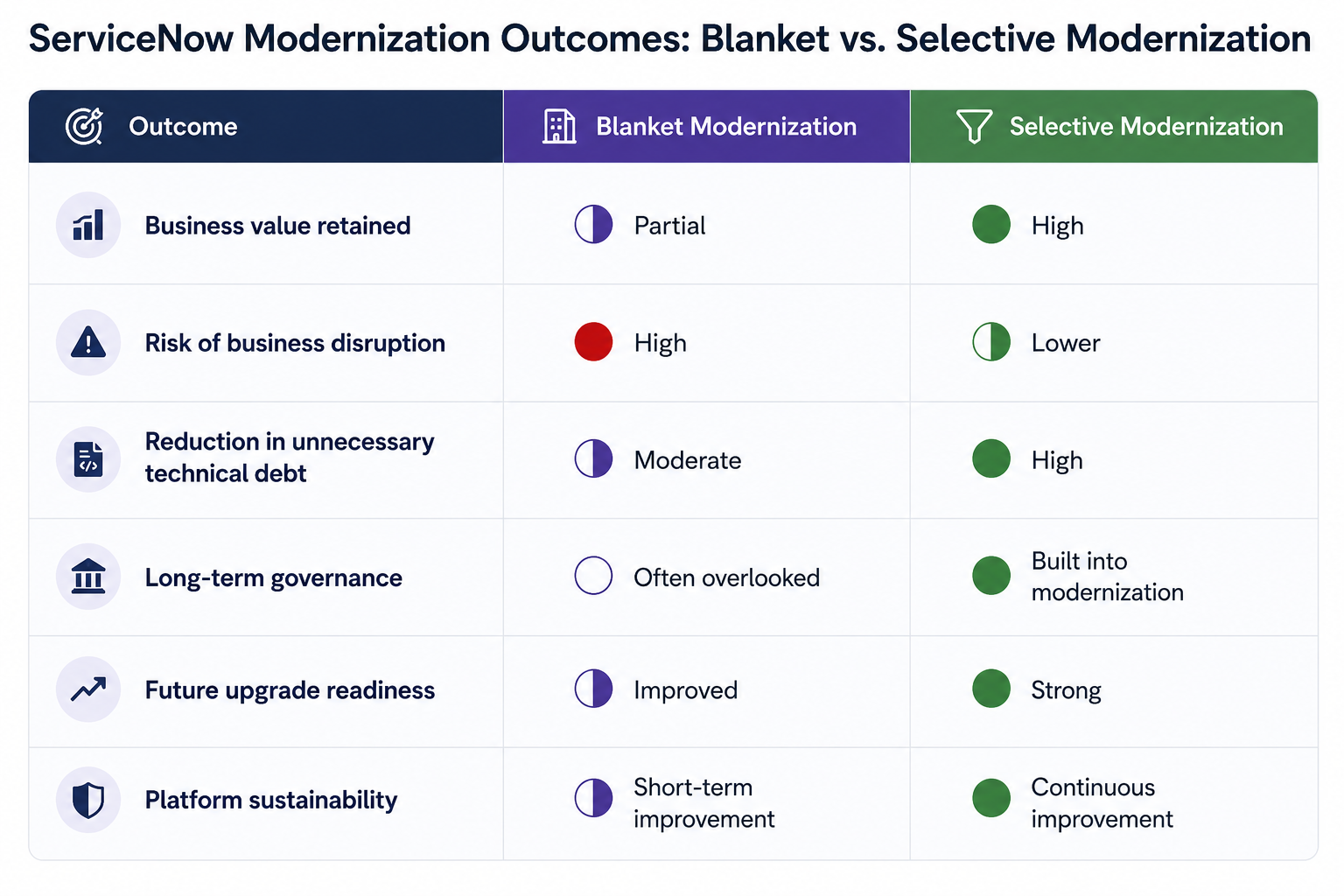
Strong platform governance ensures modernization decisions remain valid long after implementation. Without clear ownership and decision records, today's justified platform decision becomes tomorrow's unexplained technical debt.Every retained customization should have:
• A business owner who is accountable for the capability it supports.
• Clear documentation explaining what the customization does and why it exists.
• A business justification that confirms the value it continues to deliver.
• A review lifecycle to determine whether it should still exist as the platform and business evolve.
These practices create governance to support modernization as an on-going journey. Without governance, technical debt gradually returns with every new enhancement, exception, and workaround. New requirements can still be addressed, but they are evaluated against existing platform capabilities before new layers of customization or configuration complexity are introduced.
Teams with strong ServiceNow governance spend less time questioning why something exists and more time deciding whether it still deserves a place in the platform. This makes future modernization decisions faster and reduces the effort required to evaluate upgrade impacts.Long-term platform health depends on maintaining the same governance discipline after modernization as during it. Without regular reviews and clear ownership, technical debt gradually returns through incremental changes rather than major initiatives.
Conclusion
Every modernization decision affects how your ServiceNow platform will support the business tomorrow. Before deciding what to keep, change, or retire, take the time to understand why it exists and whether it's still the best way to achieve the business outcome. That's how to reduce technical debt without losing the capabilities that matter.
Origin helps organizations understand their platform before transforming, allowing them to make modernization decisions based on business value, platform capabilities, and a clear understanding of their ServiceNow environment.


.png)
.png)
.png)
.png)

.png)
.png)
.png)
.png)
.png)
.png)
.png)
.png)
.png)
.png)
.png)
.png)